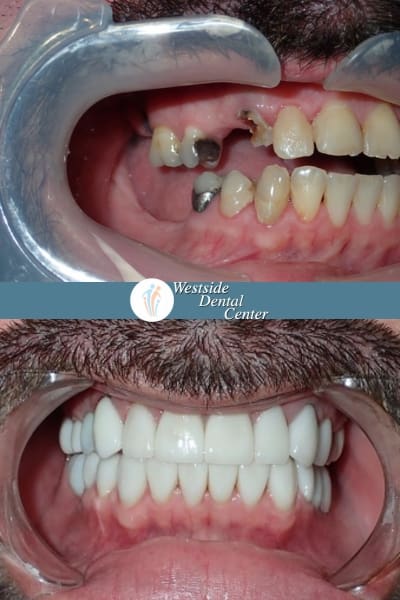
Tooth loss can disrupt your life in ways you might not expect. It affects how you eat, speak, and smile. It can even impact your confidence and overall health.
Most tooth loss is preventable. And when it does happen, modern dentistry offers excellent solutions that can restore both the function and beauty of your smile.
At Westside Dental Center in Plantation, FL, Dr. Uttma Dham helps patients preserve their natural teeth whenever possible. But she also understands that sometimes tooth loss is unavoidable. That’s why she offers advanced tooth-replacement options, including dental implants, to help you smile with confidence again.
Read on to learn three common causes of tooth loss and what you can do to protect your smile.
1. Advanced Gum Disease: A Silent Threat
Gum disease is one of the leading causes of tooth loss in adults. In fact, it affects nearly half of American adults over age 30.
Gum disease starts when natural bacteria in your mouth multiply and infect your gum tissue. In its early stage (gingivitis), you might notice:
- Swollen or tender gums
- Bleeding when you brush or floss
- Persistent bad breath
Many people ignore these early signs. But gum disease doesn’t go away on its own. As the infection progresses, it destroys the tissues and bone that hold your teeth in place. Your gums may pull away from your teeth, forming pockets where more bacteria collect. Eventually, teeth can loosen and even fall out.
How to Prevent It
The good news is that gum disease is both preventable and treatable when caught early.
At home:
- Brush twice daily and floss once a day
- Consider an antibacterial mouthwash to reduce bacteria
- Bleeding gums are a warning sign, so don’t ignore them
At the dentist:
- Visit your Plantation, FL, dentist every six months for cleanings and exams
- Professional cleanings remove tartar you can’t reach at home
- Regular exams allow Dr. Dham to spot gum disease in its earliest, most treatable stages
If gum disease does develop, treatments like scaling and root planing (a deep cleaning) can help restore your gum health and protect your smile.
2. Untreated Tooth Decay: Small Problem, Big Consequences
Cavities are incredibly common. In fact, most people will have at least one in their lifetime. The key is treating them promptly.
Tooth decay starts small. A cavity forms when bacteria produce acid that eats away at your enamel. In its early stages, a cavity might not hurt at all.
But decay doesn’t stop on its own. Without treatment, it continues to spread deeper into the tooth through the enamel and dentin, eventually reaching the soft pulp at the center.
When decay reaches this point, you might experience:
- Severe tooth pain
- Infection or abscess
- Damage too extensive to repair with a simple filling
At this stage, a root canal or even tooth extraction may be the only options.
How to Prevent It
At home:
- Brush with fluoride toothpaste twice daily
- Floss daily to remove plaque between teeth
- Limit sugary snacks and drinks
At the dentist:
- Professional cleanings remove plaque and tartar
- Dental exams catch cavities early, when they’re easiest to treat
- Dr. Dham can place tooth-colored fillings that look natural and preserve your tooth structure
3. Impact Trauma to the Face: When Accidents Happen
Not all tooth loss happens gradually. Sometimes, it happens in an instant, like a fall, a sports injury, a car accident. A sudden blow to the face can knock a tooth completely out of its socket. This is called an avulsed tooth. When this happens, time is critical.
What to Do Immediately
If a tooth is knocked out, follow these steps:
- Find the tooth. Pick it up by the crown (the chewing surface), and never touch the root.
- Rinse gently with water if it’s dirty. Do not scrub or remove tissue fragments.
- Try to reinsert it into the socket. Hold it in place with gentle pressure or by biting down softly.
- If you can’t reinsert it, keep the tooth moist. Place it in a cup of milk, or hold it inside your cheek (between teeth and gum). Do not store it in plain water.
- See a dentist immediately. Ideally, within the hour. The sooner you get help, the better the chance of saving the tooth.
How to Prevent It
- Wear a custom mouthguard during contact sports
- Avoid using your teeth to open packages or bite hard objects
- Buckle up in the car
What If Tooth Loss Can’t Be Prevented?
Sometimes, despite our best efforts, tooth loss happens. The good news is that modern dentistry offers excellent solutions.
Dental implants are the gold standard for replacing missing teeth. They:
- Look and feel like natural teeth
- Preserve jawbone health (unlike dentures or bridges)
- Restore full chewing function
- Can last a lifetime with proper care
Dr. Dham has advanced training in dental implant restorations and can help you explore whether implants are right for you.
Protect Your Smile with Regular Dental Care
The best way to prevent tooth loss is to take good care of your teeth at home and see your dentist regularly.
At Westside Dental Center, Dr. Uttma Dham and her team provide gentle, comprehensive care for patients of all ages. Whether you need a routine cleaning, treatment for gum disease, or advanced tooth replacement, you’ll find a warm, welcoming environment designed for your comfort.
Ready to protect your smile? Call our Plantation office at or request an appointment online today.
We proudly serve patients from Plantation, Sunrise, Davie, Ft. Lauderdale, and throughout South Florida.